The Other Dish and the Moral Defense: Why We Blame Ourselves When Others Leave
- naomielb
- May 5, 2025
- 2 min read


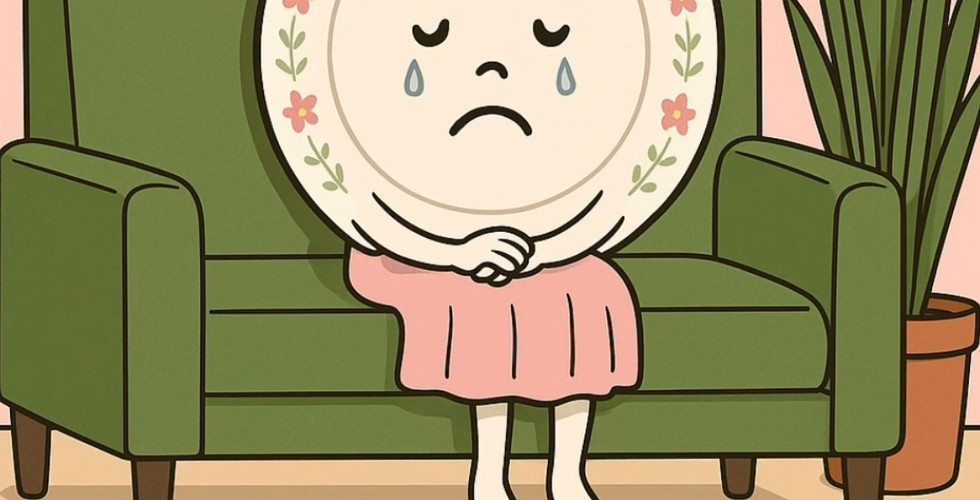



In the latest Rabbit Therapist episode, we meet the Other Dish — the one left behind when the Dish famously ran away with the Spoon. Sitting in Rabbit’s cozy woodland office, the Other Dish wonders: “Maybe if I’d been shinier… or more interesting… Spoon would have stayed.”
It’s funny, sweet — and heartbreakingly human.
This moment speaks to a deep and universal psychological pattern called the moral defense, a concept that offers profound insight into why we so often blame ourselves in the face of rejection, abandonment, or loss.
What is the moral defense?
The moral defense is a survival strategy that begins in childhood. When children experience pain, neglect, or inconsistency, they instinctively search for meaning:“Why is this happening to me?”
Young children, lacking the cognitive capacity to grasp adult complexity or life’s unpredictability, often default to the simplest explanation:“It must be because of me.”
In this way, they turn what’s chaotic and painful into something that at least feels understandable — and sometimes, fixable. Believing “I’m bad” or “I’m not enough” offers an illusion of control:
If I change myself, maybe I can make things better.
If I’m the problem, maybe I can prevent this from happening again.
As painful as self-blame is, it can feel safer to believe in personal fault than to face the reality that sometimes people leave, parents fail, or relationships fracture for reasons beyond our control.
The Other Dish’s heartbreak
In the Rabbit Therapist episode, the Other Dish beautifully embodies this defense:“Maybe if I’d been shinier… maybe if I hadn’t been chipped… Spoon would have chosen me.”
Rabbit gently guides the Dish toward a deeper truth: sometimes others leave because of their own storms, their own longing, their own path. And no amount of polishing or perfection could have changed that.
This is the essential work of healing: loosening our grip on the belief that every loss is our fault.
Why we carry this into adulthood
Though the moral defense forms in childhood, many of us carry it into our adult relationships. When we’re ghosted by a friend, criticized by a partner, or excluded from a group, our inner child often leaps to center stage, whispering:“You weren’t interesting enough. You were too much. You drove them away.”
Without reflection, we live under the weight of self-blame — constantly trying to polish ourselves into worthiness.
A gentler truth
The invitation in this episode — and in our real lives — is to hold a gentler truth:
Not all pain is your fault.
Not all losses are yours to prevent or repair.
You are worthy of love and belonging, even when others fail to offer it.
Letting go of the moral defense is tender, vulnerable work. But it frees us from cycles of self-punishment and opens the door to greater self-compassion and more authentic relationships.


Comments